

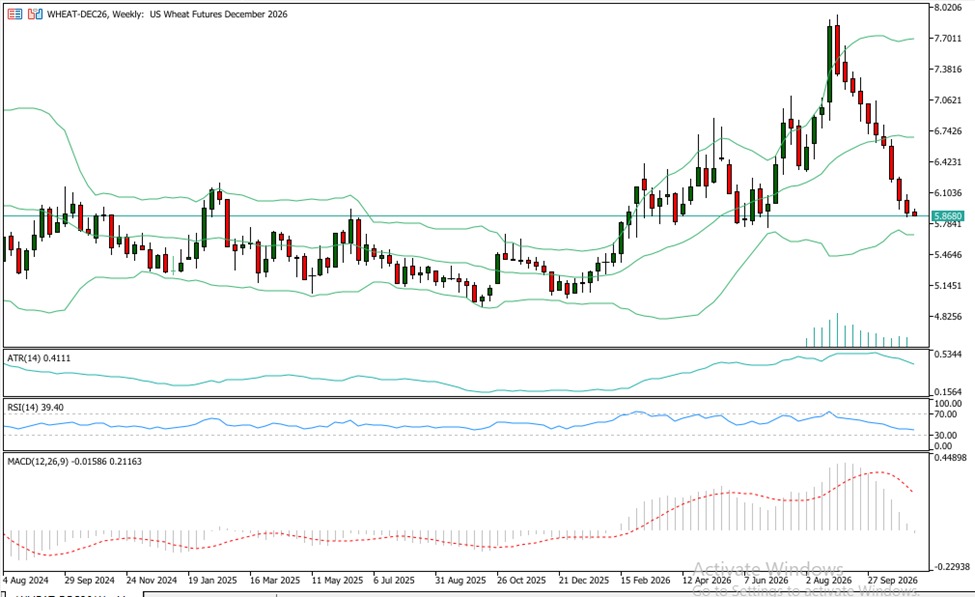
Wheat futures fell below $6.00 per bushel on Friday, reaching their lowest level since early July, as improving prospects for peace negotiations between Russia and Ukraine reduced the geopolitical risk premium. The decline also reflects expectations of abundant global supplies and increased competition among major exporting countries.
US-mediated peace talks between Ukraine and Russia are scheduled for November 10–11 in Abu Dhabi, with technical representatives from both countries and the United States expected to participate. US President Donald Trump’s remarks suggesting that the conflict could end soon further strengthened hopes of a potential agreement.
A possible peace agreement could eventually restore grain shipments from the Black Sea region, one of the world’s major agricultural supply hubs. Increased export availability from Russia and Ukraine could intensify global competition and place additional downward pressure on wheat prices.
Wheat prices have declined steadily since reaching a 3½-year high of $7.67 per bushel on August 28. Expectations of production reaching its second-highest level on record, supported by larger harvests in Australia and Argentina, have contributed to the prolonged decline.
According to the Food and Agriculture Organization (FAO), global wheat production in 2026 is forecast at approximately 813.9 million tonnes. Although production is expected to decline by 3.3% compared with the previous year, the overall supply outlook remains relatively comfortable.
Meanwhile, Argentina is expected to contribute significantly to global wheat availability, with its 2026 crop forecast at 23.8 million tonnes. Improved production prospects in Argentina and Australia could increase export competition, while US wheat export demand remains an important market consideration.
Weather conditions remain another key factor influencing wheat prices. Rainfall patterns and crop development across the United States, Europe, Australia and the Black Sea region will be closely monitored, as unfavorable weather could affect production estimates and create supply-related price volatility.
Overall, wheat prices may remain under pressure due to strong global supply expectations and optimism surrounding Russia-Ukraine peace negotiations. However, geopolitical developments, adverse weather conditions and changes in international demand could trigger volatility. Traders should closely monitor the November 10–11 peace talks and upcoming USDA updates for fresh market direction.