
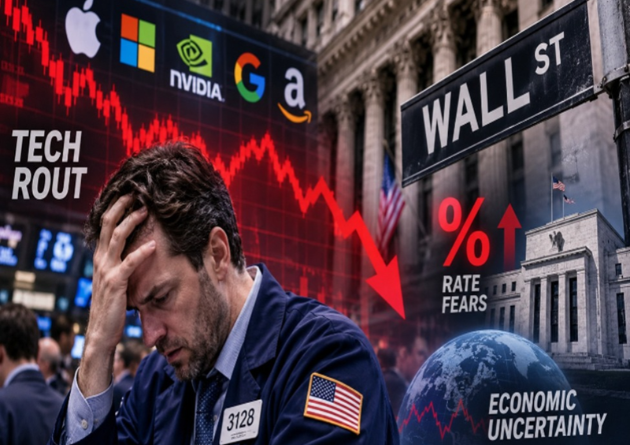
The US equity market faced significant selling pressure during the previous week, with major indices extending their losses amid growing concerns over artificial intelligence (AI) valuations, tighter monetary policy and economic uncertainty. Investor sentiment weakened considerably as market participants reassessed the sustainability of the recent technology-led rally. The S&P 500 entered correction territory, falling more than 10% from its October record high, reflecting a broader shift towards risk aversion.
The US stock market experienced a significant decline on previous session, with the S&P 500 falling by 8.6%, the Nasdaq Composite dropping by 10.02%, and the Dow Jones Industrial Average losing 8.3%. The Nasdaq’s sharp decline pushed the index into negative territory for 2026, reflecting the ongoing technology-sector sell-off. All three major indices recorded substantial weekly losses, marking one of their weakest performances in more than a year.
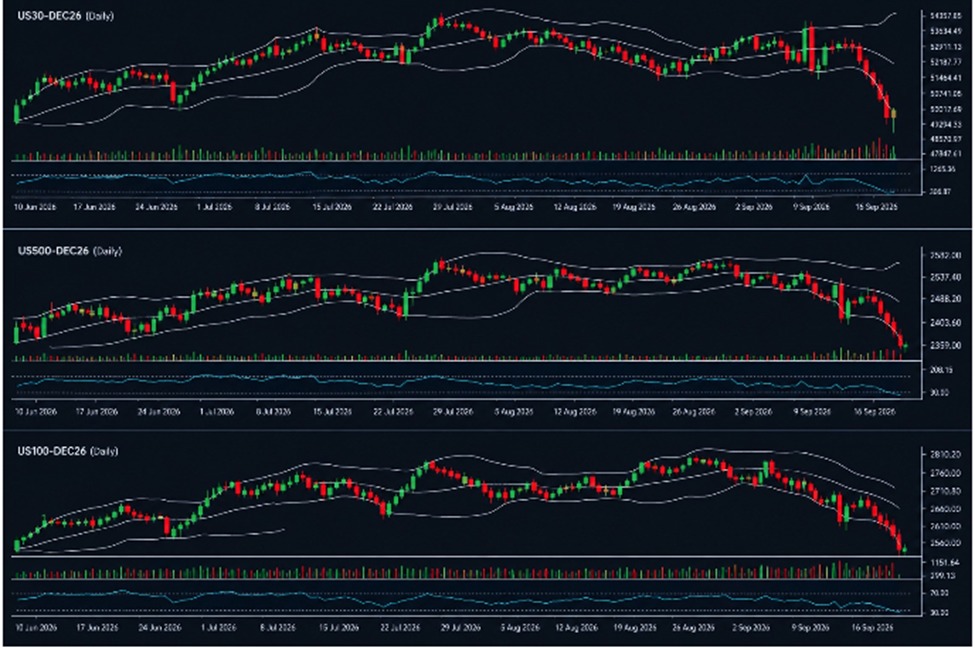
Technology and semiconductor stocks remained the primary source of market weakness as investors questioned whether massive investments in AI infrastructure would generate sufficient returns. Major technology companies and chipmakers faced renewed selling pressure despite strong corporate earnings and optimistic revenue projections. Investors have become increasingly selective, focusing on profit margins, cash flow and the long-term commercial potential of AI rather than relying solely on growth expectations.
Monetary policy expectations also contributed to the cautious market environment. Persistent inflation and hawkish signals from Federal Reserve officials have increased concerns that interest rates could remain elevated or rise further. Higher borrowing costs typically reduce the attractiveness of equities by increasing corporate financing expenses and putting pressure on valuations, particularly among high-growth technology companies. Investors are therefore closely monitoring upcoming inflation data and Federal Reserve communications for indications of the future interest-rate trajectory.
Meanwhile, market volatility increased significantly as investors reduced exposure to riskier assets and shifted towards more defensive sectors. The CBOE Volatility Index (VIX) climbed to 35.89 on 20 November, reflecting heightened uncertainty and demand for portfolio protection. Consumer staples, healthcare and utilities demonstrated relative resilience compared with technology and other economically sensitive sectors. US Treasury securities also attracted demand as investors sought safer investment opportunities amid the equity market correction.
On the economic front, investors will closely monitor upcoming US indicators for further insight into economic growth, consumer spending and inflationary pressures. The second estimate of third-quarter GDP, October Personal Consumption Expenditures (PCE) inflation data and the Federal Reserve’s Beige Book are scheduled for release on 25 November. These indicators could significantly influence expectations surrounding monetary policy and provide further direction to equity markets ahead of the December Federal Reserve meeting.
Despite the recent downturn, the longer-term outlook for US equities remains supported by corporate earnings potential, technological innovation and continued investment in artificial intelligence. However, elevated valuations and uncertainty surrounding the profitability of AI-related investments could limit the scope for an immediate recovery. Market participants are increasingly demanding stronger earnings visibility and evidence that substantial capital expenditure will translate into sustainable revenue and profitability growth.
Overall, the near-term outlook for the US equity market remains cautious, with volatility likely to persist as investors assess inflation trends, Federal Reserve policy and corporate earnings prospects. A moderation in inflation and improved clarity regarding interest rates could help restore confidence and support a gradual recovery. Conversely, further monetary tightening, disappointing economic data or continued weakness in technology stocks could extend the correction. Investors are expected to remain defensive and selective while awaiting stronger signals of market stabilization.