
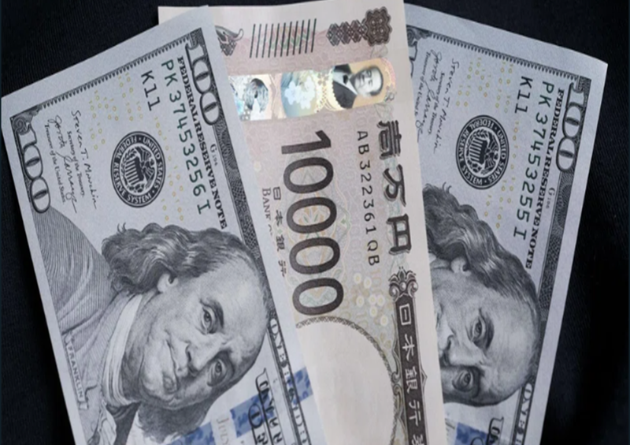
The U.S. dollar strengthened on Wednesday as investors remained cautious ahead of significant U.S. economic releases, including inflation figures and updated third-quarter growth estimates. The greenback also found support from persistent inflation concerns and expectations of further Federal Reserve monetary tightening, while uncertainty surrounding artificial intelligence valuations and potential U.S. trade restrictions continued to influence market sentiment.
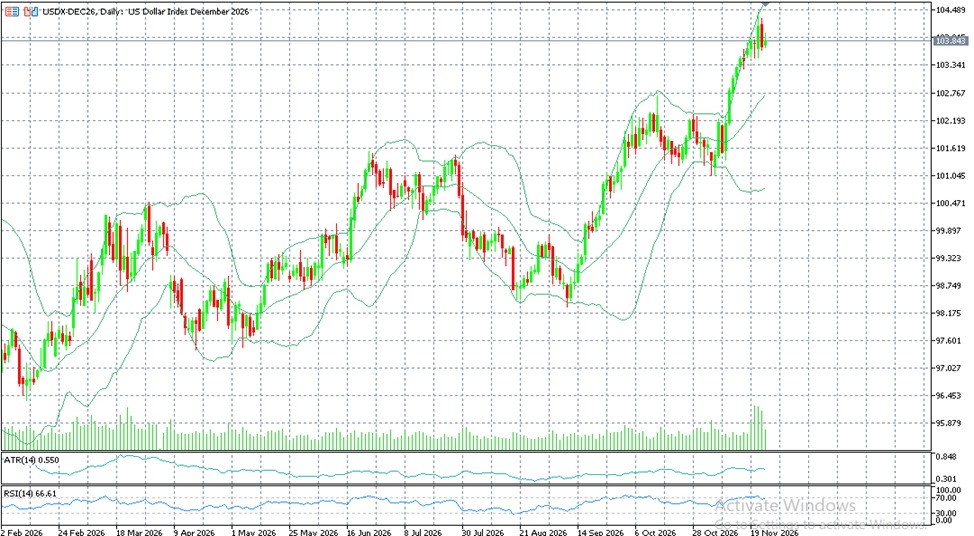
The U.S. Dollar Index (DXY), which measures the dollar’s performance against a basket of six major currencies, advanced 0.2% to 104.02. The index is on course to record an approximately 2% gain in November, reflecting renewed demand for the greenback amid expectations that elevated inflation could prompt the Federal Reserve to maintain a tighter monetary policy stance.
In the broader currency market, the euro weakened 0.2% to $1.0948, while the British pound declined 0.3% to $1.3073. The Japanese yen remained largely unchanged at 159.21 against the dollar, indicating relatively subdued movement in the currency market ahead of key economic developments.
Market participants are now closely monitoring October’s Personal Consumption Expenditures (PCE) Price Index, the Federal Reserve’s preferred measure of inflation, along with the second estimate of U.S. third-quarter Gross Domestic Product (GDP).
Economists expect monthly PCE inflation to rise by 0.3%, compared with September’s 0.5% increase, potentially indicating some moderation in price pressures. Meanwhile, the U.S. economy is expected to have expanded at an annualized rate of 3.5%, suggesting that economic activity remains relatively resilient.
According to the CME Group’s FedWatch tool, interest rate futures are pricing in a 96% probability of a Federal Reserve rate increase in December, alongside a 64% likelihood of another hike in January.
These expectations reflect persistent inflation concerns and the possibility that policymakers may need to maintain restrictive monetary conditions for longer. However, growing uncertainty over the sustainability of AI-driven investment and its contribution to future economic growth has raised questions about how much further the Federal Reserve can tighten policy without putting additional pressure on economic activity.
Adding to market uncertainty, the Trump administration is preparing the findings of an investigation into alleged excess industrial capacity among 16 major trading partners. The investigation could potentially pave the way for additional country-specific import tariffs, renewing concerns over international trade relations and the possibility of further disruptions to global trade flows
Overall, the dollar’s near-term direction will largely depend on incoming U.S. economic data. Stronger-than-expected inflation figures could reinforce expectations of further monetary tightening, potentially providing additional support to the greenback.
Conversely, signs of easing inflation or weakening economic growth could challenge the dollar’s recent gains by reducing expectations of further Federal Reserve rate increases.