
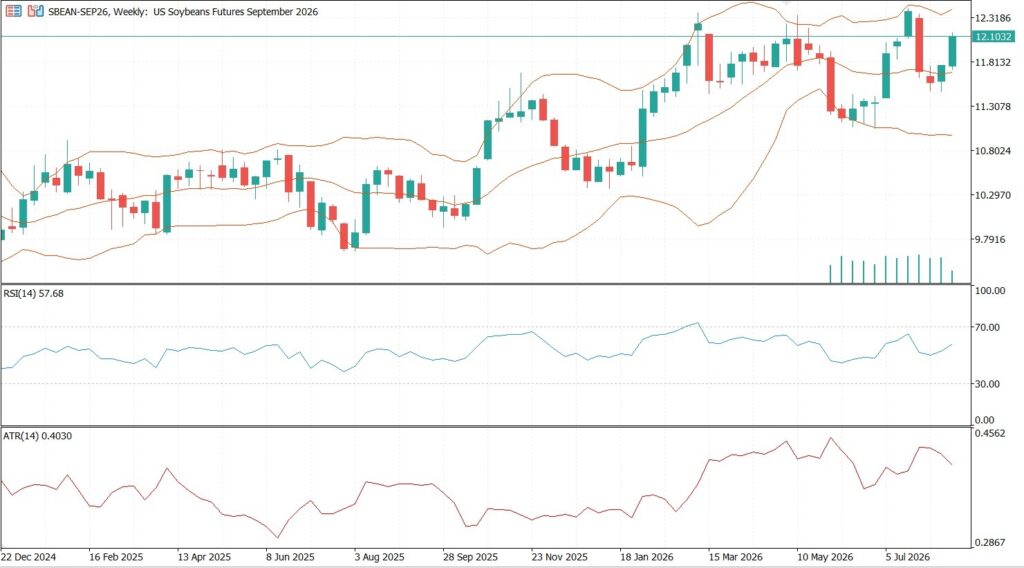
Soybean futures surged past the critical psychological threshold of $12 per bushel to touch a fresh three-week high. This bullish momentum was heavily fueled by robust domestic processing demand and a corresponding rally in global crude oil markets. Higher energy prices traditionally lift the agricultural sector by boosting the value of soybean oil, a primary feedstock used in the expanding biodiesel industry.
Fresh industrial data from the National Oilseed Processors Association (NOPA) provided a major catalyst for the upward price movement. NOPA reported that its members crushed a massive 216.647 million bushels of U.S. soybeans in July, representing a 1.1% increase from June and a staggering 10.7% jump compared to the same period last year. However, the data also revealed a subtle undercurrent of tightening capacity, as the daily processing rate actually eased to 6.989 million bushels from the 7.145 million bushels averaged a month earlier.
With domestic demand firmly established, market participants are shifting their focus to the supply side as they await the highly anticipated Pro Farmer field tour. This annual crop tour will provide traders with crucial, boots-on-the-ground indications of U.S. soybean yields. The search for fresh data is especially urgent after the USDA recently downgraded its official yield forecasts, putting the market on high alert for any further signs of production shortfalls.
Production anxieties have been amplified by erratic weather patterns ripping across the U.S. farm belt. Heavy rainfall throughout key regions of the Midwest has triggered widespread concerns over excess soil moisture, localized flooding, and deteriorating crop conditions. While rain generally helps pod development, excessive water at this stage of the growing season can drown root systems and foster yield-depressing fungal diseases.
International demand and geopolitical friction are providing a strong floor for prices on the global stage. Chinese importers have maintained a aggressive buying pace, with traders confirming that China has already locked in roughly 7 million metric tons of U.S. soybeans. At the same time, ongoing shipping disruptions and reduced cargo loadings at Russian and Ukrainian Black Sea ports are choking competing grain flows, forcing international buyers to lean heavily on American agricultural exports.