
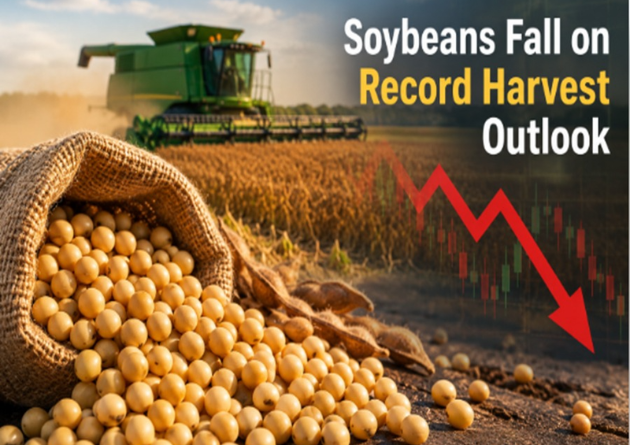
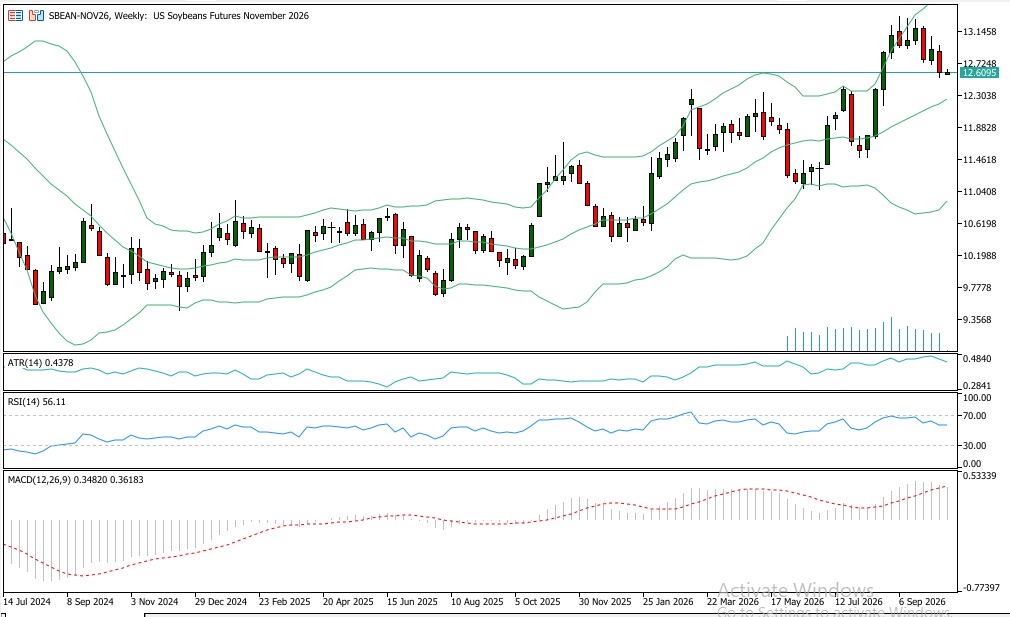
Soybean futures declined to around $12.60 per bushel, reaching their lowest level in seven weeks as expectations of a potentially record US harvest outweighed renewed export demand from China. The market remains under pressure from improving crop availability and weaker domestic processing figures, although fresh export purchases are providing some support. The near-term outlook will largely depend on the pace of harvesting, export demand and upcoming US crop estimates.
US harvesting activity has accelerated following a period of mostly dry weather across the Midwest. According to the latest reported figures, 46% of the soybean crop had been harvested by October 11, exceeding the average market estimate of 44%. Earlier rainfall had delayed fieldwork, but improved conditions allowed farmers to resume harvesting. Midweek showers temporarily slowed progress, while forecasts for drier weather could help farmers complete additional fieldwork and increase near-term supply.
Expectations of a record US harvest remain a major bearish factor for soybean prices. A larger crop would increase domestic availability and could place additional pressure on storage capacity, cash prices and export competitiveness. As more soybeans enter the market during the peak harvest season, buyers may gain greater negotiating power. Unless demand strengthens sufficiently to absorb the additional supply, prices could remain vulnerable to further declines.
Domestic processing data has also added pressure to market sentiment. The National Oilseed Processors Association reported that US soybean crush fell to 196.3 million bushels in September, its lowest level in thirteen months and below market expectations. A weaker crush figure indicates softer-than-anticipated processing activity and may raise concerns about domestic demand for soybeans. However, the impact on prices will also depend on soybean meal and soybean oil demand, processing margins and subsequent monthly data.
Despite these bearish factors, renewed Chinese buying is providing some support to the market. Chinese state-owned buyers recently booked additional US soybean cargoes for shipment from December onward. Reuters reported on October 16 that Chinese state-owned trading firms had purchased another 10–13 cargoes, following earlier purchases of 8–10 cargoes. These transactions indicate renewed demand after a period of limited buying, although sustained purchases will be necessary to materially offset the pressure from the US harvest.
Export sales have further strengthened the demand outlook. The US Department of Agriculture confirmed private sales of 330,000 metric tons of soybeans for delivery to China and another 283,450 metric tons for delivery to unknown destinations during the 2026/27 marketing year. These sales signal continued international interest in US supplies. However, the final price impact will depend on whether export commitments translate into sustained shipments and whether total demand can absorb the expected increase in production.
Looking ahead, traders will closely monitor US harvest progress, weather forecasts, export sales and upcoming USDA supply-and-demand estimates. Faster harvesting and expectations of larger production could extend the current downward pressure, while stronger Chinese purchases, improving export shipments or adverse weather affecting crop quality could trigger a recovery. Developments in South American planting conditions will also become increasingly important as the global market assesses future competition and supply availability.
Overall, soybean futures maintain a bearish near-term fundamental bias as abundant US harvest supplies and weaker domestic crushing activity outweigh the support from renewed Chinese demand. Nevertheless, the recent export purchases could help limit further losses if buying momentum continues. Traders should watch for confirmation from subsequent export and crop reports, as well as price reactions around key technical levels, before assuming that the decline will continue. This outlook is based on currently reported fundamentals and may change as new data becomes available.