

Oil prices were largely steady in Asian trading on Wednesday after posting sharp losses in the previous session, as easing geopolitical tensions reduced supply concerns and softened risk premiums. Crude benchmarks had fallen nearly 2% on Tuesday amid signs of progress in diplomatic engagement between the United States and Iran.
Brent crude futures edged up 0.1% to $67.51 per barrel, while West Texas Intermediate (WTI) crude gained 0.1% to $62.40 per barrel. The previous session saw Brent decline almost 2%, with WTI settling about 1% lower. Market sentiment shifted after reports suggested that Washington and Tehran had reached a preliminary understanding on key guiding principles during recent talks, potentially paving the way for increased Iranian crude exports if a formal agreement materializes. However, Iranian Foreign Minister Abbas Araqchi cautioned that an immediate deal remains unlikely.
Energy markets are closely monitoring the negotiations, given Iran’s role as a major oil producer and its strategic position along the Strait of Hormuz a critical chokepoint through which nearly one-fifth of global oil consumption is transported daily. Any progress toward a deal could ease supply constraints, while setbacks may quickly revive geopolitical risk premiums.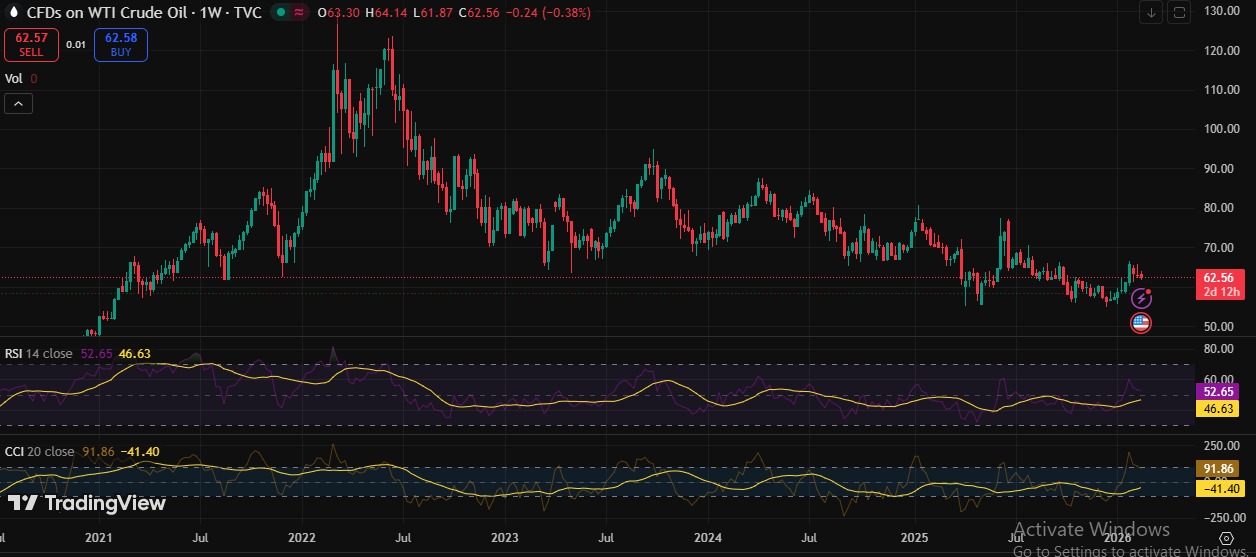
Trading activity across Asia remained subdued due to the Lunar New Year holidays in several regional markets, resulting in thin volumes and limited price movements. Investors also adopted a cautious stance ahead of key U.S. inventory data, with estimates from the American Petroleum Institute due later Wednesday, followed by official figures from the Energy Information Administration on Thursday. These reports are expected to provide clearer insight into near-term supply dynamics.
Beyond supply factors, broader macroeconomic signals remain in focus. Traders are awaiting the release of minutes from the Federal Reserve’s January policy meeting, along with Friday’s U.S. Personal Consumption Expenditures (PCE) inflation report. The data could offer further guidance on the interest-rate outlook, which has significant implications for economic growth and fuel demand expectations.
In the near term, crude prices are likely to remain sensitive to both geopolitical developments and U.S. economic indicators, with volatility expected to persist as markets assess the balance between potential supply increases and demand-side uncertainties.