
Oil prices moved slightly lower on Friday and remained on course for notable weekly losses as investors closely monitored diplomatic developments between the United States and Iran. Market sentiment improved after reports suggested progress toward a temporary ceasefire agreement between the two countries.
Brent crude futures declined by 1.2% to trade near $92.55 per barrel, while U.S. West Texas Intermediate (WTI) crude futures dropped around 2.0% to $87.11 per barrel during early trading hours. Both major oil benchmarks were heading toward weekly declines of nearly 10%, marking the steepest losses since early April.
According to reports, Washington and Tehran have reached a preliminary agreement to extend their ceasefire for an additional 60 days. The proposed deal would allow both sides to continue negotiations regarding Iran’s nuclear activities and broader regional security concerns.
The agreement is still awaiting approval from U.S. President Donald Trump, but the reports were enough to ease fears of immediate supply disruptions in global energy markets. Investors interpreted the development as a sign that tensions in the Middle East may gradually stabilize.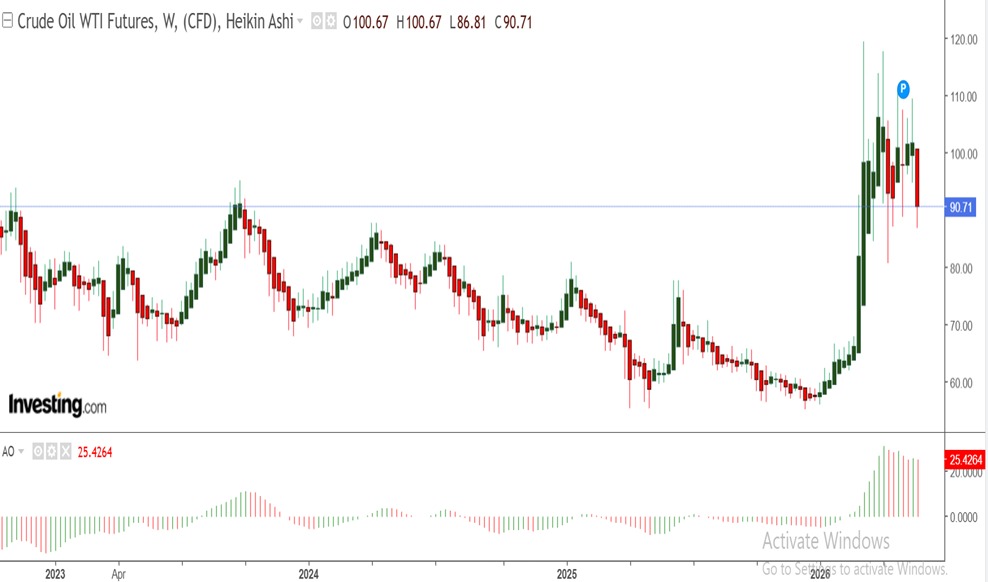
Optimism surrounding the negotiations also improved expectations for shipping activity through the Strait of Hormuz, one of the world’s most important oil transit routes. Analysts believe that a successful ceasefire could help restore smoother oil transportation in the region over time.
Despite the positive diplomatic signals, traffic through the Strait of Hormuz remains significantly below normal levels seen before the conflict. As a result, geopolitical risks continue to keep some level of support under oil prices, preventing a sharper collapse in the market.
Analysts at ING noted that much of the market has already priced in expectations of a ceasefire agreement this week. They added that while confirmation of a deal may create additional downside pressure on oil prices, the market’s vulnerability has increased due to declining global oil inventories over recent months.
Oil markets have remained highly volatile throughout the week as traders reacted to rapidly changing headlines regarding military actions and ceasefire talks. Meanwhile, investors are also watching U.S. economic data closely, as persistent inflation and slower economic growth continue to raise concerns about future global energy demand.