
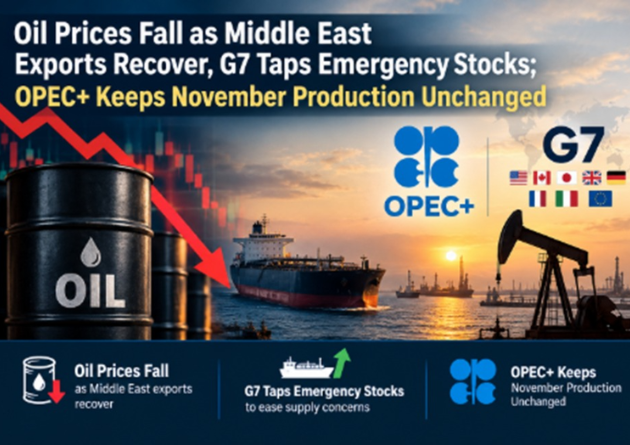
Oil prices declined on Monday as improving crude exports from the Middle East and plans by G7 nations to release emergency oil stocks eased immediate supply concerns. However, ongoing geopolitical tensions in the region continued to limit the downside.
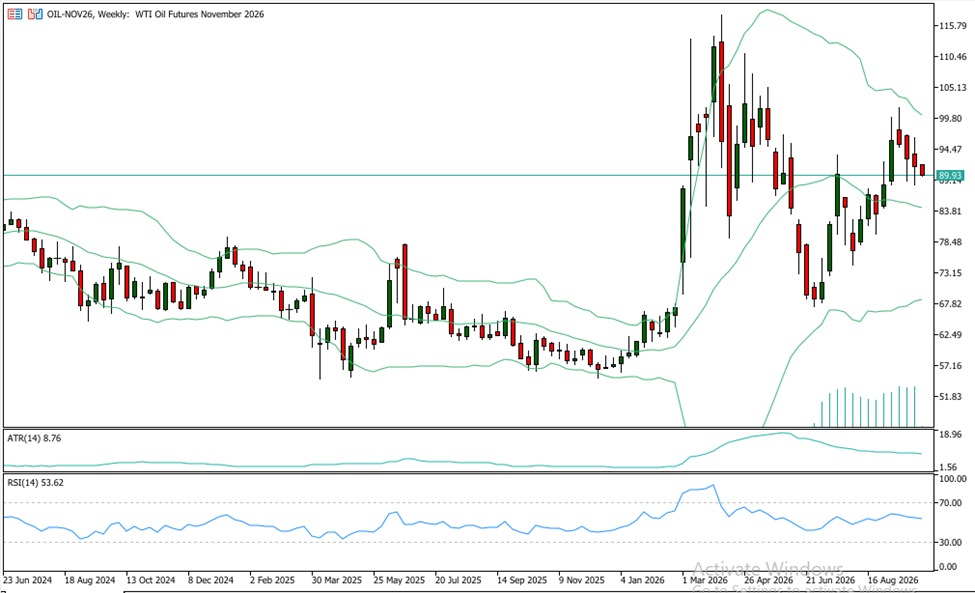
Brent crude futures for December fell around 0.7% to $101.58 per barrel, while U.S. West Texas Intermediate (WTI) crude futures for November declined 1.1% to $90.14 per barrel. The move reflected easing supply fears rather than a major shift in the broader geopolitical risk premium.
The G7 has agreed to release around 100 million barrels of crude oil and refined fuel from emergency reserves. A significant portion of diesel supplies is expected to reach the market within 20 days, providing additional short-term relief to energy markets affected by regional supply disruptions.
Meanwhile, Middle Eastern crude exports have shown a notable recovery. Kpler data indicated that regional exports moved above pre-war levels on several days during the final week of September, reaching between 19.5 million and 22.5 million barrels per day.
The recovery in exports has been supported by stronger flows through the Strait of Hormuz and alternative export routes. However, shipping risks remain elevated, meaning any fresh disruption could quickly reverse the recent improvement in supply conditions.
Geopolitical risks remain an important factor for crude prices. Iran-aligned Houthis reportedly claimed missile and drone attacks targeting Saudi Aramco facilities, although Saudi Arabia has not confirmed the reported attacks. Continued regional tensions are therefore keeping a risk premium in oil markets.
Saudi Aramco also lowered its November Arab Light official selling price for Asia by $3 per barrel to a $5 discount against the Oman-Dubai average. The pricing move, the widest discount since June 2020, suggests efforts to defend market share amid higher freight costs and changing regional supply conditions.
Adding further direction to the outlook, OPEC+ agreed to keep its November production targets unchanged, maintaining the existing supply policy. The decision provides a supportive factor for crude prices, but recovering Middle Eastern exports and the planned G7 reserve release could limit upside in the near term. The next OPEC+ meeting is scheduled for November 1.