

Global energy markets remained under significant pressure on Tuesday, March 17, 2026, as oil prices surged during Asian trading sessions. Brent crude maintained its position above the critical $100 per barrel threshold, driven by the persistent threat of supply disruptions as the military conflict between the United States, Israel, and Iran entered its third consecutive week. This upward trajectory represents a swift recovery from a 5% decline in the previous session, underscoring the extreme sensitivity of the market to shifting geopolitical headlines. Brent futures climbed 2.8% to reach $103.01 per barrel, while West Texas Intermediate (WTI) followed suit, rising 2.6% to settle at $95.54 per barrel.
The focal point of global economic anxiety remains the Strait of Hormuz, a vital maritime artery responsible for approximately 20% of the world’s oil supply. While recent reports indicated that a limited number of Indian and Pakistani-flagged gas tankers successfully navigated the passage, the waterway remains effectively blocked for the majority of global trade. Iran has maintained a selective blockade policy, signaling that while it may allow vessels from specific neutral nations to pass, it will actively target any assets associated with the United States or its allies. This selective transit has done little to calm broader market fears, particularly as U.S. efforts to form an international naval coalition have faced significant diplomatic hurdles. President Donald Trump’s calls for global assistance in policing the strait were largely rebuffed by several key allies, who have expressed hesitance to commit military resources to the region.
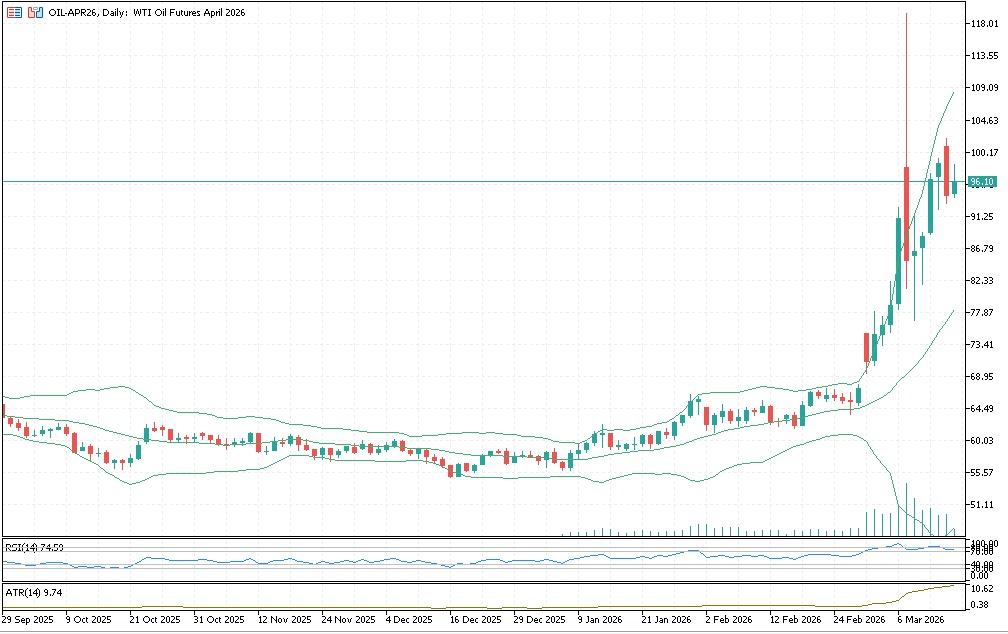
The military situation continues to escalate with no immediate signs of a diplomatic breakthrough. Following the U.S. and Israeli strikes on Kharg Island—Iran’s primary export hub—Tehran has retaliated by threatening to target U.S.-affiliated industries across the Middle East. The conflict reached a new peak in the early hours of Tuesday as Iran and Israel exchanged direct air strikes, accompanied by drone and rocket fire directed at the U.S. embassy in Baghdad. These hostilities have reinforced the “war premium” currently embedded in energy prices, as the prospect of prolonged infrastructure damage and restricted shipping routes threatens the energy security of major Asian economies that are heavily dependent on Middle Eastern crude imports.
Beyond the immediate volatility in commodity prices, the conflict is casting a long shadow over global monetary policy. The inflationary pressure generated by triple-digit oil prices has become a primary concern for financial markets, raising the specter of “stagflation”—a period of stagnant growth coupled with high inflation. This comes at a critical juncture as a series of major central banks, including the Federal Reserve, the European Central Bank, and the Bank of Japan, are scheduled to meet this week. Investors are increasingly concerned that energy-driven inflation will force these institutions to adopt more “hawkish” stances, potentially maintaining or increasing interest rates despite the fragile state of the global economy.