

Oil prices rose in Asian trade on Thursday, extending gains for a fifth straight session as attacks by Iran-backed Houthi militants on two Saudi oil tankers in the Red Sea fueled concerns over disruptions to Middle East oil supplies.
Brent crude futures jumped 3.6% to $97.55 a barrel, while WTI crude futures advanced 2.7% to $89.17 a barrel. Brent reached its highest level since June 8, reversing declines seen after the temporary U.S.-Iran ceasefire.
Houthi militants claimed responsibility for attacks on the Saudi tankers ENCELA and LAYLIA on Thursday, accusing the vessels of violating a newly declared maritime blockade.
Although Saudi officials have not confirmed any damage, the strikes underscore escalating regional tensions that continue to threaten key energy infrastructure and major shipping lanes.
The attacks came days after the Houthis warned they would target Saudi-linked vessels passing through the Bab el-Mandeb Strait, a vital gateway for global oil shipments between the Red Sea and the Gulf of Aden.
Any prolonged disruption could force tankers to reroute around southern Africa, increasing delivery times and transportation costs. At the same time, a fresh wave of U.S. strikes on Iran its twelfth straight night of operations has added to concerns over shipping security in the Strait of Hormuz
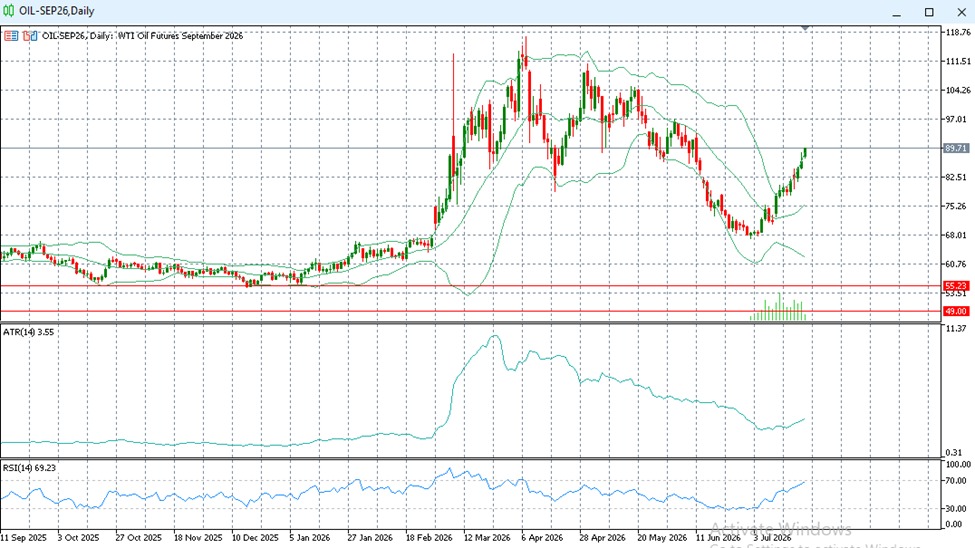
Iran’s Revolutionary Guards reported an explosion along a mined shipping route south of the Strait of Hormuz, stating that one of three oil tankers caught fire while the other two turned back from the area.
Iranian officials also claimed they had established full control over the Strait of Hormuz and declared the strategic waterway “fully closed,” warning that oil tankers would not be allowed to pass without prior authorization from Tehran.
The Strait of Hormuz and the Bab el-Mandeb Strait together account for a substantial portion of global seaborne crude exports, making any disruption across these vital shipping corridors a major concern for energy markets.
Market participants are increasingly monitoring transportation risks, rising marine insurance premiums, and the potential for further attacks on oil tankers or critical energy infrastructure.
The latest developments follow reports that several Saudi crude tankers bound for India and China altered their routes earlier this week after Houthi militants threatened to target Saudi-linked shipping.
Separately, U.S. government data pointed to weaker-than-expected demand fundamentals, with the Energy Information Administration (EIA) reporting an unexpected increase in crude oil inventories. Commercial crude stockpiles rose by 2.0 million barrels to 411.7 million barrels in the week ended July 17, defying market expectations for a decline.
Refined fuel inventories also increased, with gasoline stocks rising by 0.8 million barrels and distillate inventories climbing 1.4 million barrels. Total U.S. commercial petroleum inventories increased by 11.6 million barrels, signaling ample domestic supply despite heightened geopolitical tensions.