

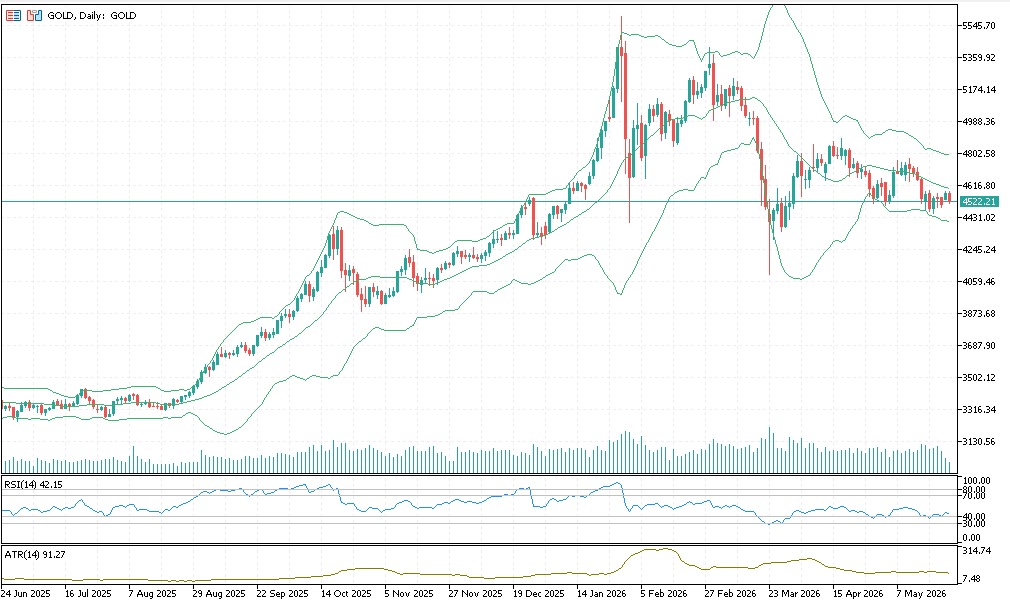
Gold prices slipped on Tuesday as renewed military tensions between the United States and Iran weakened hopes for a near-term peace agreement. Investors had initially turned optimistic after reports over the weekend suggested that both sides were making progress toward a deal that could lead to the reopening of the Strait of Hormuz, a critical route for global energy supplies. However, sentiment shifted after fresh U.S. military strikes against Iran reignited geopolitical uncertainty. Despite the pressure, gold futures managed to edge slightly higher by 0.1% to $4,561.80 an ounce during trading.
The renewed escalation came after the U.S. military confirmed strikes targeting mine-laying boats in southern Iran. According to U.S. Central Command, the attacks were carried out as a defensive measure, while officials maintained that the ceasefire between Washington and Tehran technically remained in place. The developments quickly erased recent optimism surrounding diplomatic negotiations and revived concerns that tensions in the region could intensify further. Iranian authorities responded by warning that any additional attacks on their military assets would trigger retaliation, adding another layer of uncertainty to already fragile markets.
Meanwhile, U.S. Secretary of State Marco Rubio stated that reaching a formal agreement with Iran could still “take a few days,” although he emphasized that the Strait of Hormuz would reopen “one way or another.” The waterway remains a major focal point for global markets, as it carries a significant share of the world’s oil shipments. Fears of supply disruptions have already contributed to a rebound in oil prices, with traders closely monitoring every development related to the conflict and ongoing negotiations.
Higher oil prices have also added pressure on gold by fueling concerns over inflation and future interest rate hikes. Analysts at UBS noted that gold has recently developed an inverse relationship with government bond yields. Rising expectations that major central banks, including the U.S. Federal Reserve and the European Central Bank, may continue tightening monetary policy to combat energy-driven inflation have supported bond yields and weighed on bullion prices. As geopolitical tensions and inflation fears continue to dominate market sentiment, investors are expected to remain cautious in the sessions ahead.