

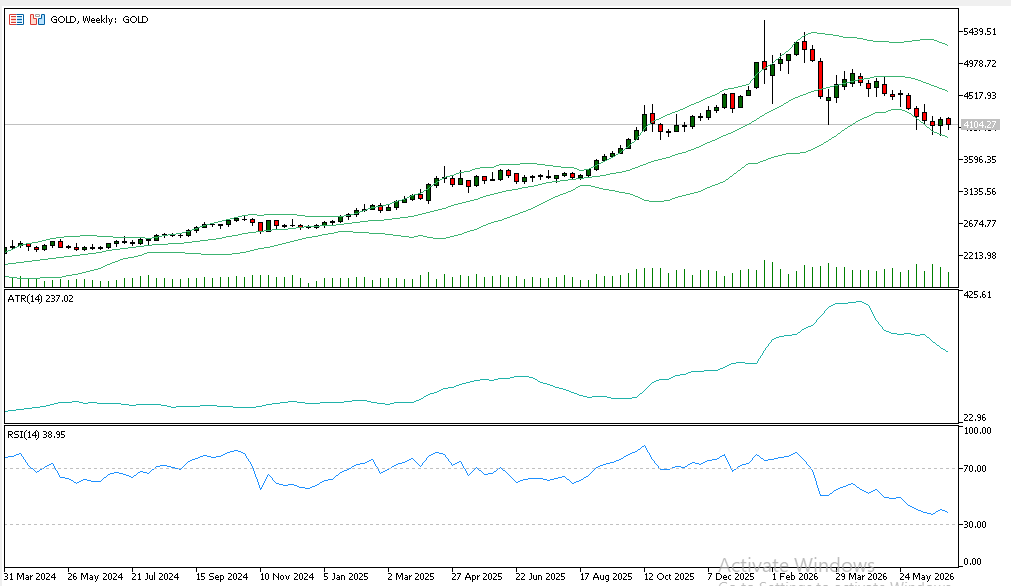
Gold futures gained 0.7% to reach $4,112.75 an ounce on Thursday, successfully clawing back three straight days of losses. The commodity maintained its firm bid tone above the critical $4,100 mark as intense geopolitical instability triggered strong safe-haven demand. The upward movement followed official statements from U.S. President Donald Trump, who announced at the NATO summit in Ankara that the ceasefire with Tehran was officially over, declaring that he does not want to waste his time negotiating and warning of additional military strikes and a new maritime blockade.
The U.S. military confirmed it had unleashed a new wave of precision strikes against more than 80 targets in Iran for a second consecutive day. According to official U.S. military statements, these actions were taken in direct retaliation for Tehran’s recent attacks on commercial ships navigating the vital Strait of Hormuz, with the objective of degrading Iran’s ability to threaten international maritime commerce. Alongside the strikes, the U.S. government revoked temporary sanctions waivers that previously allowed Tehran to export oil.
In swift response to the American operations, Iran’s military and the paramilitary Islamic Revolutionary Guards Corps launched retaliatory strikes targeting U.S. assets across the region. The Iranian military confirmed that coastal bases and facilities were struck in its southern provinces, prompting their forces to continuously target American military installations across Bahrain and Kuwait. Kuwait’s Defence Ministry officially reported that its forces successfully intercepted two ballistic missiles and 13 drones overnight as sirens went off across the military sites.
Compounding the market’s volatility, the newly released minutes from the Federal Reserve’s June 16–17 meeting revealed deep anxieties among central bankers regarding elevated inflation. U.S. price growth has increased sharply since the onset of the war in late February and remains floating well above the central bank’s 2% annual target. Fed Chair Kevin Warsh recently reiterated the bank’s strict commitment to meeting this target, signaling that controlling persistent price pressures remains the institution’s top priority, which could bolster bets on a U.S. Federal Reserve interest rate increase in 2026.
While the minutes indicated that many participants believed the appropriate federal funds rate would be within or slightly below the current target range by the end of this year, officials explicitly noted that upside risks to inflation remain elevated. The minutes further stated that some policy firming would likely be warranted to return inflation to its 2% objective, though only a few policymakers explicitly favored an immediate rate increase last month. With President Trump signaling an extended conflict, the U.S. military actively engaged in the Middle East, and influential Federal Open Market Committee members scheduled to speak, official policy decisions and active wartime developments continue to dictate the trajectory of gold futures.