

The EUR/USD pair opened the new trading week with renewed bullish momentum, climbing back toward the 1.1650 region during the Asian session as improving global risk sentiment placed fresh pressure on the safe-haven US Dollar. Investor confidence improved significantly after reports suggested progress toward a potential US-Iran peace agreement, easing fears of further geopolitical escalation in the Middle East. The possibility of reduced tensions encouraged traders to move away from defensive positions in the Greenback and shift toward higher-risk currencies, including the Euro. As a result, the shared currency recovered steadily after the pair dropped to the 1.1575 area last week, marking its weakest level since early April. The bullish opening gap further highlighted the market’s optimistic mood, with investors viewing diplomatic progress as a positive development for global trade, energy stability, and overall financial market sentiment.
Even though the Euro has regained strength in the near term, expectations regarding future US Federal Reserve policy continue to provide underlying support for the US Dollar and may limit the pair’s upside potential. Financial markets still believe the Fed could maintain a relatively hawkish stance over the longer term, especially if inflation remains persistent and economic conditions in the United States stay resilient. Some investors are even pricing in the possibility of another interest rate increase in 2026, which has prevented traders from aggressively selling the Dollar despite the recent improvement in risk appetite. Higher interest rates generally strengthen the US currency by increasing returns on Dollar-denominated assets, making the Greenback more attractive to global investors. Consequently, while EUR/USD has benefited from temporary weakness in the Dollar, uncertainty surrounding future Fed decisions may continue to act as a major obstacle for sustained bullish momentum.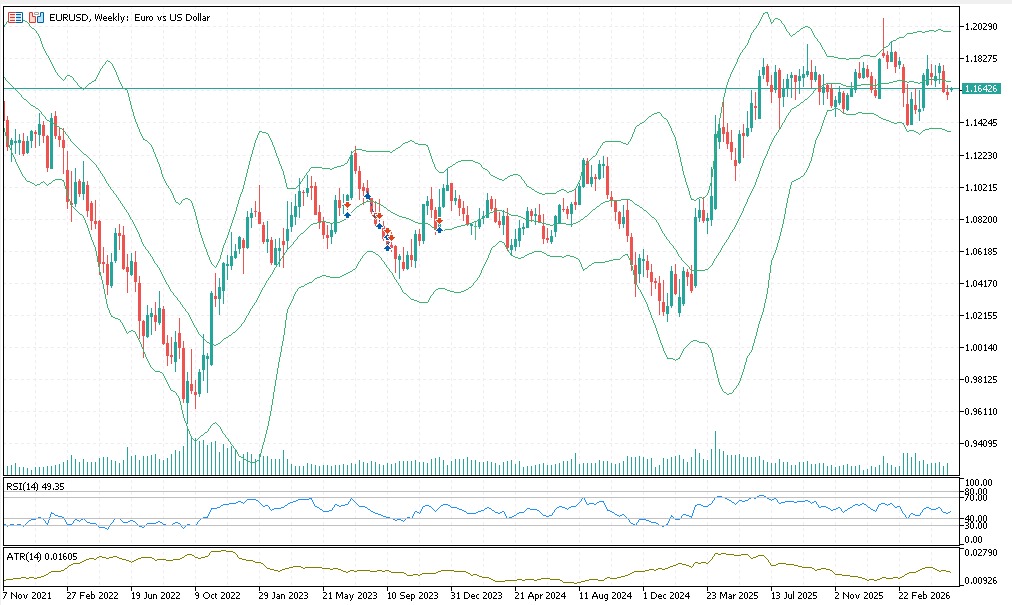
From a technical standpoint, the EUR/USD pair is showing encouraging signs of recovery after successfully holding above the important 23.6% Fibonacci retracement level of the April-May downward move. This support level has become a key technical foundation for buyers and suggests that bearish momentum may gradually be fading. In addition, several momentum indicators are beginning to favor the bulls. The Relative Strength Index (RSI) is currently hovering near the 58 level, indicating strengthening buying momentum without yet reaching overbought territory. At the same time, the Moving Average Convergence Divergence (MACD) indicator remains slightly positive, reinforcing expectations for additional short-term gains. Together, these technical signals suggest that the pair could continue moving higher if buyers maintain control above the current support zone, although traders are still likely to remain cautious given the broader uncertainty surrounding monetary policy and global economic conditions.
Looking ahead, traders are closely watching several important resistance and support levels that could determine the pair’s next major direction. On the upside, immediate resistance is expected around the 1.1675 to 1.1680 region, which aligns with the 38.2% Fibonacci retracement level and could temporarily slow bullish momentum. A decisive break above this zone may open the path toward the 1.1710 area, where the 200-period Simple Moving Average on the four-hour chart converges with the 50% retracement level, creating a strong technical barrier. If buyers manage to clear this region successfully, the pair could extend gains toward 1.1740 and 1.1785 before potentially targeting the broader cycle high near 1.1842. On the downside, immediate support remains near 1.1638, while the 1.1574 region continues to serve as a critical structural floor for the pair. A break below this level could revive bearish pressure and shift momentum back in favor of the US Dollar, potentially exposing EUR/USD to a deeper correction in the sessions ahead.