

The US Dollar strengthened on Wednesday as escalating tensions in the Middle East boosted demand for safe-haven assets. Investor sentiment turned cautious after reports of renewed military exchanges between the United States and Iran, reducing expectations for a near-term resolution to the conflict despite ongoing diplomatic discussions. Iranian attacks targeting US-linked facilities in the Gulf region were either intercepted or unsuccessful, while Iranian state media claimed that the Islamic Revolutionary Guard Corps had launched retaliatory strikes against US military assets in Bahrain. The developments highlighted the fragile security situation and reinforced concerns about further escalation in the region. US President Donald Trump stated that negotiations between Washington and Tehran remain ongoing, though markets remain skeptical about the prospects of a quick breakthrough. As geopolitical uncertainty increased, investors sought the safety of the US Dollar, supporting the greenback across major currency pairs.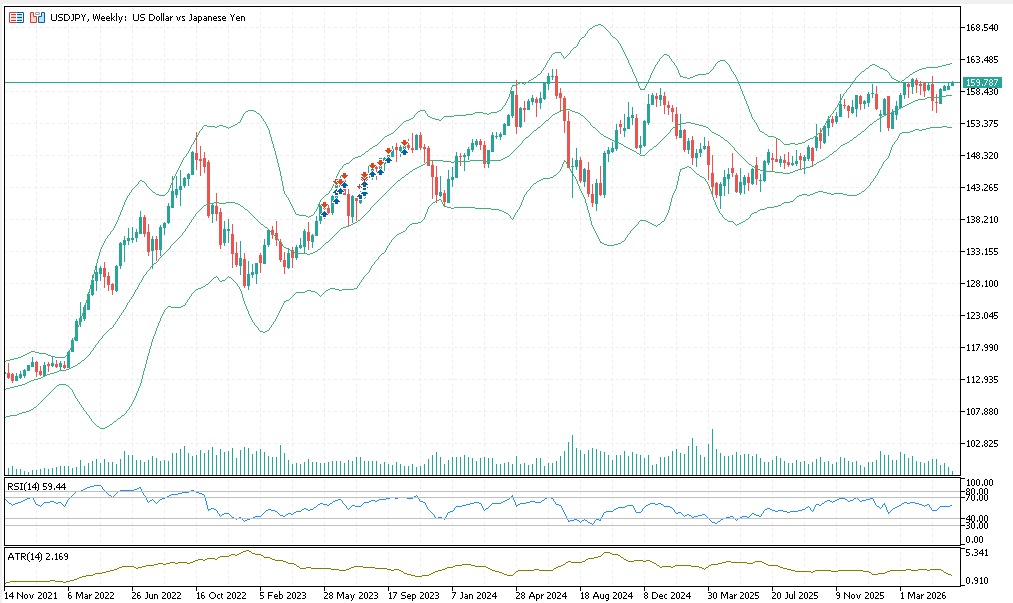
The US Dollar Index rose modestly as traders continued to favor the currency due to its safe-haven status and the perception that the US economy, as a major energy producer, may be relatively insulated from disruptions caused by the conflict. Additional support came from resilient US economic data released earlier this week. Job openings rose to their highest level since May 2024, while labor market indicators showed continued strength through lower layoffs and reduced employee turnover. Market participants are now awaiting key US economic releases, including private payroll figures, services-sector activity data, and Fridays closely watched employment report. Strong labor market data could reinforce expectations that the Federal Reserve will maintain a cautious stance on interest rate cuts, providing further support for the Dollar. Meanwhile, the Japanese Yen weakened toward the psychologically important 160-per-dollar level, a zone where Japanese authorities previously intervened to stabilize the currency. Prime Minister Sanae Takaichi warned that officials remain prepared to respond if exchange-rate movements become excessive, signaling that intervention risks are increasing as the Yen approaches critical levels
Attention also remained focused on comments from Kazuo Ueda, who indicated that policymakers would carefully evaluate the advantages and risks of raising interest rates at the Bank of Japan’s upcoming meeting. Ueda noted that higher crude oil prices could create secondary inflation effects, potentially pushing underlying inflation above desired levels. Elsewhere, both the Euro and the British Pound traded lower against the stronger US Dollar, reflecting broad-based demand for the greenback amid geopolitical uncertainty and expectations that US interest rates could remain higher for longer. From a currency market perspective, the combination of safe-haven flows, geopolitical uncertainty, and relatively higher US interest rates continues to favor the Greenback against most major currencies. Unless there is a significant improvement in Middle East relations or a notable deterioration in US economic indicators, the Dollar is likely to remain well-supported in the near term. Market participants will now closely monitor upcoming US labor market data, Federal Reserve commentary, and developments surrounding US-Iran negotiations for further direction. Any signs of stronger-than-expected economic activity or renewed geopolitical tensions could reinforce bullish momentum for the Dollar, while progress toward a diplomatic resolution in the Gulf region may ease safe-haven demand and provide relief for rival currencies.