
Oil prices dropped on Tuesday, continuing their losses after a volatile trading session. The decline came after Donald Trump suggested that the conflict involving Iran could soon come to an end while also discussing possible steps to offset disruptions in global crude supply.
Despite the early drop, oil prices recovered from their lowest levels of the day because Trump did not provide a clear timeline for when the conflict might end. Markets also remained tense after strong remarks from Tehran, which signaled uncertainty about any immediate de-escalation and kept fears of supply disruptions alive.
The price decline followed several comments Trump made on Monday indicating that the war with Iran might be nearing its conclusion, although he did not specify when this might happen. He also warned Iran not to block the Strait of Hormuz, cautioning that doing so would trigger severe military consequences.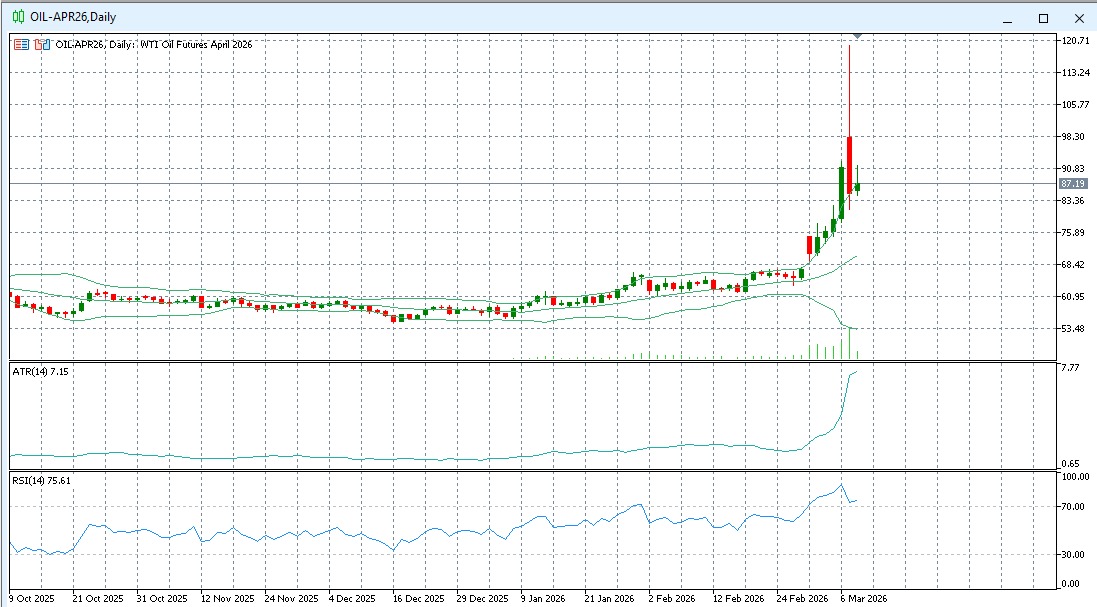
Iran responded by stating that it would block the strategic waterway as long as U.S. and Israeli attacks continue, adding that Tehran itself would determine when the conflict ends. Trump also suggested that the U.S. could consider allowing certain waivers on oil sales from sanctioned countries, particularly Russia, to help reduce potential supply shortages in the Middle East. Reports last week indicated that Washington had permitted India to continue purchasing Russian oil for at least another month.
Oil prices had surged to about $119.50 per barrel on Monday after tensions escalated sharply in the Iran conflict, especially following strikes by U.S. and Israeli forces on several Iranian energy facilities. Iran retaliated by targeting oil infrastructure in multiple Middle Eastern countries and attacking ships moving through the Strait of Hormuz, a critical route responsible for transporting roughly 20% of the world’s crude oil supply.
However, oil prices later erased much of their earlier gains and finished Monday lower after reports emerged that major global economies were preparing measures to manage potential supply disruptions. The U.S. and members of the Group of Seven (G7) were reportedly considering releasing oil from their emergency petroleum reserves to help limit inflationary pressures caused by the conflict.
So far this year, oil prices have risen by around 25% due to escalating tensions in the Middle East and concerns about long-term supply disruptions. Analysts at OCBC noted that their earlier expectation of oil falling below $70 per barrel by mid-year is now being challenged by risks similar to the energy shock caused by the Russia‑Ukraine War. They also warned that the longer the Strait of Hormuz remains closed, the more oil production could be forced offline.
The sharp increase in oil prices has heightened worries about rising inflation worldwide, as a prolonged conflict could push up energy costs and increase price pressures across global economies.